- Fincham -
The name Fincham was brought to England in the wave of migration that followed the Norman Conquest of 1066. The Fincham family lived in the parish of Fincham in Norfolk. The name of this place derives from the Old English word finc, which means finch, and ham, which means homestead. 1
The Domesday Book of 1086 lists this parish as P(h)incham.
The Roman Fen Causeway once ran through Fincham meaning the parish has yielded numerous Roman artefacts including three separate hoards of silver coins, a curious figure of a hare and hound and a bust of Jupiter. The foundations of a Roman building have been discovered in the north of the parish, which have been excavated by Norfolk Heritage in the 1990s.
The parish has also yielded many artefacts from the Anglo-Saxon period including rare coins dating from the reign of King Rædwald and another that was minted in Maastricht. With later coins found dating from the reigns of King Cnut and Æthelred the Unready.
In the Domesday Book, Fincham is listed as a settlement of 164 households in the hundred of Clackclose. In 1086, the village was divided between the East Anglian estates of William de Warenne, Hermer de Ferrers, Bury St Edmunds Abbey, St. Etheldreda's Abbey,
Ralph Baynard and Reginald, son of Ivo.
Fincham Hall is a manor-house dating from the Fifteenth and Sixteenth Centuries, with an earlier octagonal brick tower. Today, the hall is available for tourists to rent on Airbnb.
Talbot Hall was built in Eighteenth Century and was notable for hosting an impressive collection of orchids currently displayed in Kew Botanical Gardens.[citation needed]
Geography
According to the 2021 census, Fincham has a population of 514 people which shows an increase from the 496 people listed in the 2011 census.
Most of Fincham village is a dedicated conservation area due to its distinct rural character.
St. Martin's Church
Fincham's parish church is dedicated to Saint Martin, with the exterior of the church dating from the Fifteenth Century and the interior being the remains of an extensive Nineteenth Century restoration. St. Martin's is located within the village on the High Street and has been Grade I listed since 1959. St. Martin's font is famous throughout Norfolk due to the fact it stands on four separate legs and depicts scenes from The Gospel of Christ.
Fincham once had another church, dedicated to Saint Michael, but this fell into disuse and was subsequently demolished in the mid-Nineteenth Century.
Amenities
Fincham Memorial Hall is located close to the Village Green, and is the venue for all the community and hosts the annual Village Fete.
In 2005, the Fincham Chorus was formed by people from Fincham and the surrounding area. To date, they have staged several concerts and performed at one wedding, as well as taking part in the Christmas carol services. To date, they have raised over £10,000 for St Martin's Church restoration fund.
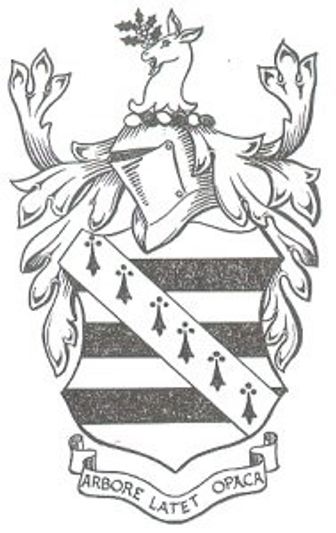
Possible Translation behind the Parish Crest
"A dark bough hides"
The phrase "arbore latet opaca" translates to "a dark bough hides" in Latin. This phrase is part of Virgil's Aeneid, where it describes a dark tree that conceals something significant, often interpreted as a reference to the underworld or hidden mysteries.
The Aeneid - Virgil
As he prayed in these words and gripped the altar,
the seer began: “Born of the blood of the Gods,
Aeneas of Troy, easy is the descent to Avernus:
night and day the gate of black Dis stands open.
To retrace your steps, return to the upper air,
that is the task, there the difficulty. A few, that
Jove loved and favoured or bright virtue lifted to
heaven, divinely born, were able. Woods clothe
the centre, Cocytus flows round it in its black course.
If such great love and desire is in your mind twice
to sail the lakes of Styx, twice see black Tartarus
and take the mad challenge on, hear what must be
done first. Hidden in a thick wood there is a branch,
golden both in its leaves and its pliant stem,
said to be sacred to the infernal Queen; the whole
grove hides it, shadows shut it in with dark defences.
No-one is allowed under the buried places of earth who
has not plucked the gold-leaved growth from the tree.
Lovely Proserpina required this to be brought to her as
her due gift. As soon as the first bough is taken there is
another, also in gold, in leaf of the same metal.
So seek it with eyes upturned, and, when found,
pluck it by hand; for it will come easy and willing
if fate chooses you; else you will not win it with any
violence or be able to cut it with hard iron.
Also, you do not know, alas, the breathless body of
a friend lies tainting the whole fleet with death,
while you ask counsel and linger at our door.
First put him to his rest and lay him in his tomb.
Bring black beasts, let them first be your first offering.
So will you then see the groves of Styx and the realm
the living may not tread.” She ended, and kept silence.